Ma’am… that’s a washer, not a clown car!
Inside any washer, the magic happens when clothes can tumble and swim in soapy water. If you pack them in too tight, they just spin around in one big soggy blob.
Laundry pros say a proper load should be about ½ to ¾ full, with clothes piled loosely and enough room to fit your hand between the top of the load and the drum.
Stain Buster the friendly ghost floated over a row of shiny washers at Stain Busters Laundromat, humming happily…
…until he saw someone trying to stuff three overflowing baskets into the smallest machine.
He gasped.
“Ma’am… that’s a washer, not a clown car.”
Why Washer Size Actually Matters
Inside any washer, the magic happens when clothes can tumble and swim in soapy water. If you pack them in too tight, they just spin around in one big soggy blob.
Laundry pros say a proper load should be about ½ to ¾ full, with clothes piled loosely and enough room to fit your hand between the top of the load and the drum.ByNext+3Tide+3Tangie+3
When you overload:
Clothes can’t move, so dirt and detergent get trapped in folds instead of rinsed away.Spin Plus Laundromat+2Liquid Laundromats NZ+2
The load can’t spin properly, so items come out too wet and take forever to dry.The Spruce
The machine’s motor, bearings, and suspension get overworked, shortening the life of the washer.Solo Appliance Repair+3KWR Appliances+3Sears Home Services+3
Stain Buster shook his head.
“Overloading doesn’t save you a wash. It just gives you dirtier clothes and a tired machine.”
Why “Sizing Up” = Cleaner Clothes
Instead of cramming everything into the tiniest washer, it’s often smarter to go one size bigger—especially for:
Jeans and hoodies
Towels
Bedding and blankets
Bulky kids’ stuff and sports gear
Large-capacity washers give fabrics room to move so water and detergent can reach every crease. Studies and laundromat pros note that bigger machines often deliver cleaner results and can even be more efficient than doing multiple small, overstuffed loads.The Laundry Company+2Liquid Laundromats NZ+2
And for things like comforters? Experts flat-out say: if it “barely fits,” it’s not getting properly cleaned—better to use a true large-capacity machine than force it into a small one.Real Simple+1
Stain Buster’s Size Guide at Stain Busters
At Stain Busters Laundromat, you’ve got a full army of machine sizes for every kind of laundry day:
18 lb washers – Great for small, everyday loads
T-shirts, underwear, a few towels. Perfect when you just need a quick refresh.45 lb washers – The “family load” workhorse
About 2–3 regular home loads in one go; awesome for a week’s worth of clothes.Clean Vibes Laundry Company+2Tangie+262 lb washers – For big, mixed loads
Jeans, towels, hoodies, uniforms—all together and still room to move.82 lb washers – Bulky items + clothing
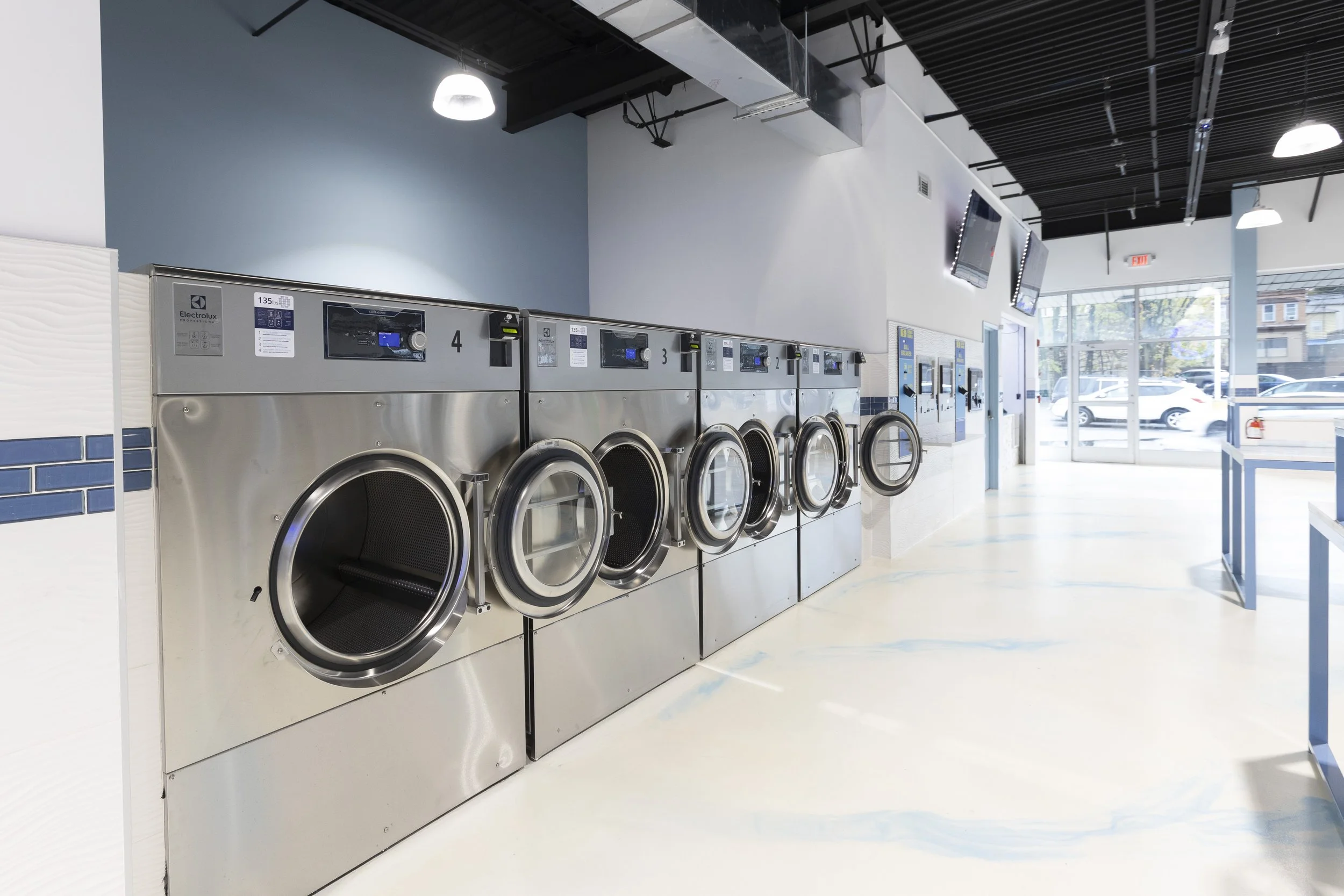
Comforters, blankets, plus regular clothes without turning the drum into a brick.135 lb mega washers – The monsters
King-size comforters, giant bedding sets, massive family loads—all at once with room to truly wash instead of just soak.
Compared to a home washer that usually handles 12–16 lb per normal load, these commercial machines give you serious breathing room.Tangie+1
Stain Buster floated proudly.
“Why fight with three tiny loads when one big, properly sized washer can do a better job?”
Ghost-Approved Rules of Thumb for Picking Washer Size
Before you swipe your card, Stain Buster suggests three simple rules:
1. If You’re Unsure, Size Up One
If you’re debating between two washer sizes, go with the next size up and load it about ¾ full, loosely packed. Clothes will tumble, rinse, and spin better.Tangie+2ByNext+2
2. Match the Job to the Machine
Everyday clothes for one or two people? → 18 lb
Weekly family laundry? → 45 lb or 62 lb
Towels + bedding together? → 62 lb or 82 lb
Comforters / big blankets / mega loads? → 82 lb or 135 lb
3. Don’t-Do-This Test
If you have to:
Sit on the door to get it to close
Jam clothes in with your forearms
Or you can’t even wiggle a hand into the drum
…you’ve gone too far. That load needs a bigger washer or to be split in two.
Cleaner Clothes, Happier Machines, Less Hassle
As the customer moved her overflowing mess from the smallest washer into a roomy 62 lb machine, Stain Buster gave an approving nod.
The results?
Clothes came out cleaner and fresher
Spin cycle left them less wet
Dry time was shorter—and cheaper
No angry, shaking washer
“See?” Stain Buster said, doing a little victory spin.
“Right size washer + room to move = cleaner clothes, faster.
At Stain Busters, you bring the laundry… and I’ll make sure it has space to shine.”

Liquid? Powder? Pods? Free & clear? Enzymes?!
Stain Buster the friendly ghost zoomed through the aisles of Stain Busters Laundromat, watching customers load up the big 450G machines.
He noticed one person staring at the detergent shelf like it was a math exam.
“Liquid? Powder? Pods? Free & clear? Enzymes?!” they groaned.
Stain Buster floated down, cape of bubbles fluttering.
“Good news,” he said. “You don’t need a chemistry degree. Just a few ghost-approved rules of thumb.”
Stain Buster the friendly ghost zoomed through the aisles of Stain Busters Laundromat, watching customers load up the big 450G machines.
He noticed one person staring at the detergent vending machine like it was a math exam.
“Liquid? Powder? Pods? Free & clear? Enzymes?!” they groaned.
Stain Buster floated down, cape of bubbles fluttering.
“Good news,” he said. “You don’t need a chemistry degree. Just a few ghost-approved rules of thumb.”
Rule #1: If You Have an HE Washer, You Must Use HE Detergent
Stain Buster pointed to the little “HE” symbol on a bottle.
“Your high-efficiency washer uses less water and needs a low-sudsing detergent to work right,” he explained.
HE detergents are:
Formulated to make fewer suds
Quick-dispersing for low-water cycles
Designed to prevent residue and protect machine performance Safeway+3Arm & Hammer+3Whirlpool+3
“Using regular detergent in an HE washer?” Stain Buster shuddered. “That’s how you get oversudsing, longer cycles, and a grumpy machine.”
Ghost rule:
HE washer = HE detergent. Every time.
Rule #2: Choose the Form That Fits How You Wash
Stain Buster snapped his fingers and three ghostly icons appeared: 💧, 🧂, and 🟣.
Liquid Detergent (💧)
Best when you:
Wash in cold water a lot
Want to pretreat stains directly
Need something that dissolves easily and avoids residue
Experts note that liquid dissolves well in all temperatures and is especially handy for greasy or oily stains and handwashing. Whirlpool+2HowStuffWorks+2
Powder Detergent (🧂)
Best when you:
Do lots of heavily soiled loads (work clothes, towels)
Want the most cost-effective option
Usually wash in warm/hot water
Powder is often cheaper per load but can struggle to dissolve fully in cold water, which may leave residue if dosing is off. Consumer Reports+2Whirlpool+2
Pods / Packs (🟣)
Best when you:
Want maximum convenience
Don’t want to measure anything
But they’re:
Usually more expensive per load
Easy to overdose on if you toss in “one extra for luck”
“Which one is ‘best’?” the customer asked.
“The one you’ll use correctly,” Stain Buster replied. “But if you want flexibility and pretreat power, I usually vote liquid.”
Rule #3: Enzymes Are Your Stain-Fighting Squad
Stain Buster conjured tiny enzyme superheroes—one with a steak, one with pasta, one with oil.
“See these little guys? They’re enzymes,” he said. “They break down different types of stains so your detergent doesn’t have to do all the heavy lifting.”
Modern enzyme detergents:
Break down protein stains (sweat, blood, dairy)
Attack starches (pasta, chocolate, sauces)
Help with oils and grease (cooking stains)
Work well even in cooler water, saving energy IFF+5Cleaning Institute+5Yeser Chemicals+5
Ghost rule:
If you have kids, athletes, food-spillers, or life in general:
Look for “with enzymes” or “stain-fighting enzymes” on the label.
Rule #4: Sensitive Skin? Go Fragrance-Free & “Free & Clear”
A customer waved Stain Buster over, scratching their arm.
“My skin hates laundry day,” they said.
“Then your first suspect is fragrance and dyes,” Stain Buster replied.
Dermatologists and sensitive-skin guides consistently recommend:
Fragrance-free / scent free (not just “unscented”)
Hypoallergenic formulas
“Free & Clear” types with no dyes or perfumes New York Post+5Branch Basics+5Good Natured Brand+5
These are less likely to irritate eczema-prone or baby skin while still cleaning effectively.
Ghost rule:
If anyone in your house has sensitive skin, start with fragrance-free, dye-free.
You can always add scent with dryer balls + a drop of essential oil if tolerated—but never directly onto skin or fabrics that touch babies.
Rule #5: Match the Detergent Strength to the Job
Stain Buster rolled out a mini “laundry menu.”
Everyday mixed loads (T-shirts, jeans, socks):
Standard HE liquid or powder, maybe with enzymes.Heavily stained / super dirty loads:
Enzyme-heavy detergent, maybe boosted with oxygen bleach or baking soda, plus the right cycle.Delicates, wool, silk, or special fabrics:
Gentle or specialty detergents without enzymes or harsh builders for those fibers. Liquid Laundromats NZ+2Clean Right Laundromat+2
“Think of it like choosing the right tool,” Stain Buster said. “You don’t need a sledgehammer for a thumbtack, and you don’t need a delicate wool wash for muddy soccer uniforms.”
Rule #6: Don’t Just Pick the Loudest Scent
The customer grabbed a neon bottle that promised “MEGA TROPICAL THUNDERBLAST FRESHNESS.”
Stain Buster gently pushed it back.
“Smell is personal,” he said, “but strong perfume doesn’t mean cleaner clothes. Strongly scented detergents can:”
Mask leftover residue or odors
Bother guests, coworkers, or classmates
Be rough on sensitive skin and noses Branch Basics+2Good Natured Brand+2
“If you love scent, choose something moderate and let the clean speak louder than the perfume.”
Quick Stain Buster Checklist for Detergent Shopping
Before the customer headed to the register, Stain Buster handed them a simple list:
Washer type:
HE machine? → Must be HE detergent. Safeway+3Arm & Hammer+3Whirlpool+3
Family needs:
Sensitive skin or babies? → Fragrance-free, hypoallergenic, “Free & Clear.” New York Post+3Branch Basics+3Good Natured Brand+3
Stain level:
Lots of food, sweat, sports, kids? → Detergent with enzymes. IFF+5Cleaning Institute+5Yeser Chemicals+5
Water temp & habits:
Mostly cold washes? → Liquid or enzyme detergent that works in cold water. Real Simple+3Whirlpool+3Onsen®+3
Budget & style:
Want cheap and strong? → Powder.
Want flexible, good for pretreating? → Liquid.
Want easiest? → Pods (but watch the cost and dose). Real Simple+4Consumer Reports+4Whirlpool+4
The customer smiled. “So it’s not about the flashiest bottle. It’s about matching the detergent to my washer, my skin, and my mess.”
Stain Buster gave a proud little nod.
“Exactly,” he said. “Right detergent, right amount, right machine—and I’ll handle the stains.”
Then he zoomed off to stop someone else from pouring half a jug of soap into a 450G washer.
High Spin Means You Don’t Need High Heat
In the Stain Busters state-of-the-art facility, those 450G washers spin so fast they fling out a huge amount of water. High-G extract machines are designed to leave clothes much drier, which means shorter dryer time and less energy needed.
In the Stain Busters state-of-the-art facility, those 450G washers spin so fast they fling out a huge amount of water. High-G extract machines are designed to leave clothes much drier, which means shorter dryer time and less energy needed. Facebook+5Laundrylux+5Electrolux Professional España+5
“In normal people language,” Stain Buster explained, “your laundry is already halfway dry. Cranking the dryer to MAX HEAT is like roasting marshmallows with a flamethrower.”
What High Heat Really Does to Clothes
As the dryer roared, Stain Buster pressed his little ghost hand to the door.
“Inside that hot metal tornado,” he said, “three bad things can happen:”
Shrinkage & warping – High heat can shrink cotton, wool, linen, and even some synthetics, changing the fit and feel of your clothes. Swagify+3ByNext+3Good Housekeeping+3
Fiber damage over time – Repeated tumble-drying on high heat breaks down fibers, causing thinning, pilling, and wear. Reviewed+1
Destroyed stretch & elastics – Leggings, bras, athletic wear, and anything with spandex or elastic lose their snap faster under high heat. Classic Dry Cleaner+2ClothesLyne+2
“Every time you blast them on high,” he said, “you’re trading months of life for 5 minutes of ‘faster.’ Not worth it.”
Why Medium–Low Heat Is the Sweet Spot
Stain Buster floated over to the control panel and pointed at Medium and Low like a proud teacher.
Laundry experts say:
Medium heat (around 130–135°F) is ideal for most everyday clothes—T-shirts, cotton blends, jeans, and synthetics—hot enough to dry efficiently, but much gentler than high. Made New Laundry Website+3Better Homes & Gardens+3Homes and Gardens+3
Low heat (around 120–125°F) is best for delicates, activewear, elastic items, and “clothes you actually like and want to keep.” It protects fibers from melting, stretching, or warping. Classic Dry Cleaner+3Maytag+3Whirlpool+3
“And remember,” he added, “because your 450G washer already removed so much water, medium or low heat + shorter time will get you dry without the damage.”
Stain Buster’s Dryer Rules for a 450G World
He slapped a sticker onto the front of the dryer that read:
“Friends Don’t Let Friends Use High Heat.”
Then he laid down the law:
For most loads:
Use Medium heat and check your clothes early—they’ll dry faster than you think after a high-spin wash.For anything stretchy, delicate, or expensive:
Use Low heat or even “air fluff,” and pull items out while they’re slightly damp to finish air drying. Maytag+1Only use High heat for sturdy things like towels or heavy work clothes—and even then, you probably don’t need it for the full cycle.
The Happy Ending (and Longer-Lasting Clothes)
The customer, now properly educated by a translucent laundry nerd, restarted the dryer on Medium.
After a short cycle, the clothes came out:
Dry
Soft
Not shrunk
Not toasted
“Wow,” they said. “Same dry time… and they feel better.”
Stain Buster winked.
“In a 450G world,” he said, “the spin does the heavy lifting—your dryer just needs to finish the job, not cremate it.”
And somewhere, every pair of leggings in the laundromat quietly whispered, “Thank you.”
More Soap ≠ Cleaner Clothes (Sorry, Humans)
Stain Buster the friendly ghost was making his usual rounds at the state-of-the-art 450G high-efficiency washers, when he spotted it…
A mountain of suds oozing out of a machine like a bubble volcano.
He gasped. “Somebody tried to do their taxes in there, because that is way too much SOAP.”
Stain Buster the friendly ghost was making his usual rounds at the state-of-the-art 450G high-efficiency washers, when he spotted it…
A mountain of suds oozing out of a machine like a bubble volcano.
He gasped. “Somebody tried to do their taxes in there, because that is way too much SOAP.”
More Soap ≠ Cleaner Clothes (Sorry, Humans)
High-efficiency (HE) washers use way less water than old-school machines—often only 20–60% of the water a traditional washer uses.Cleaning Institute+1 That’s great for the planet, but it also means every drop of detergent matters.
When you dump in a giant capful of soap “just to be safe,” a few not-so-fun things happen:
Too many suds cushion your clothes so they slide around instead of rubbing against each other. That mechanical action is what actually gets them clean.Tide
Detergent can’t fully rinse out, leaving a sticky residue in fabric and inside the washer.Appliance World+1
That residue traps odor, moisture, and bacteria, leading to musty smells, funky towels, and a “clean” washer that smells like an old gym bag.Howard’s Appliances & Mattresses+2The Spruce+2
Basically, your clothes are marinating in dirty bubble soup.
How Little Soap Do You Actually Need?
This is where people look at Stain Buster like he’s lost his ghostly mind.
For most HE machines, laundry pros and manufacturers say you usually only need about:
1–2 tablespoons of HE liquid detergent for a normal load,
Sometimes even ½ ounce (about 1 tablespoon) is enough in efficient models.Real Simple+3Whirlpool+3Science Appliance+3
Yes, that’s way less than the detergent cap suggests. The cap is selling detergent; your washer is just trying to survive.
Now picture that in a 450G high-extract washer—these beasts spin so fast they fling out a ton of water and leftover suds. If you overdose on soap, they’re just spinning sticky residue deeper into everything.
A Day in the Life of an Over-Soaped Machine
Stain Buster floated into the drum for a closer look.
Inside he saw:
Clothes stuck together with a slimy film
White streaks and spots from undissolved or excess detergentBetter Homes & Gardens
A rubber door seal sulking under a ring of gunk
He shook his little ghost head.
“When you use too much soap in a 450G machine,” he explained, “you’re not upgrading your clean—you’re signing up for:”
Smelly washer (detergent + warm, damp places = mildew party)Howard’s Appliances & Mattresses
Smelly clothes (odor gets trapped in residue)Appliance World+1
More wear and tear on the machine, which has to work harder to flush all that foam out
It’s like pouring an entire bottle of shampoo on your head and then trying to rinse it off with a Dixie cup of water.
Stain Buster’s “Tiny Soap” Rules for 450G HE Machines
Stain Buster floated up to the detergent shelf and laid down the law:
Use real HE detergent.
Look for the “HE” symbol—these formulas are low-sudsing and made for low-water washers.Cleaning Institute+1Start small.
For a normal load in a high-efficiency machine:Begin with about 1 tablespoon of HE detergent.
Only bump up slightly for huge or super-dirty loads.
Let the 450G spin do its job.
Those high-speed extract cycles remove water, dirt, and soap efficiently—you don’t need to “help” them with extra detergent.If you see lots of suds, that’s a warning sign, not a flex.
Bubbles might look satisfying, but in an HE washer, they usually mean too much detergent.Tide+1
The Moral of the Soap Story
At the end of the day, Stain Buster watched a customer measure a tiny line of HE detergent into the drawer, load up a big mix of jeans and hoodies, and start the cycle.
No suds monster. No angry washer. Clothes came out clean, soft, and not even a little funky.
The customer blinked. “That’s it? That small amount actually worked?”
Stain Buster gave a proud little spin.
“In a high-efficiency 450G machine,” he said, “less soap, more smart. I fight stains. You? Just stop trying to drown them.”
And somewhere deep in the drum, the washer sighed in relief.
Why Stain Buster Loves Hydrogen Peroxide
In our state-of-the-art Stain Busters Facility, hydrogen peroxide is like a mini, gentler bleach that:
Lifts tough stains like blood, red wine, grass, coffee, sweat, and food spills by oxidizing (breaking apart) the stain molecules.Branch Basics+1
Whitens and brightens dingy whites when added to the wash water, acting as a bleach alternative without the harshness of chlorine.The Spruce+1
Disinfects and deodorizes, helping freshen fabrics as it cleans.ClothesLyne+1
Most people use 3% hydrogen peroxide (the brown-bottle stuff) because it’s strong enough to work but generally safe for most washable, colorfast fabrics—as long as you test first.ClothesLyne+1
The Ghost’s Go-To Method
Stain Buster guided the customer to a folding table under the bright lights.
Test for colorfastness
He dabbed a tiny bit of hydrogen peroxide on an inside seam and waited a few minutes. No fading? Game on.MGCafe Publications+1Pretreat the stain
He poured a small amount of 3% hydrogen peroxide directly on the coffee/salsa zone. Tiny bubbles fizzed up as it went to work on the stain.Branch Basics+1Gently blot, don’t scrub
Using a clean cloth, he dabbed the area, lifting loosened pigment instead of grinding it deeper into the fibers.Into the big washer
The shirt went into one of Stain Busters’ high-extract machines with quality detergent and a little extra peroxide in the dispenser for an all-over brightening boost.ClothesLyne+1
Safety Tips from a Responsible Ghost
Before he floated off, Stain Buster reminded her:
Never mix hydrogen peroxide with vinegar or bleach—that can create irritating or dangerous chemicals.The Spruce
Always store it in a dark bottle and check that it still fizzes; old peroxide turns into plain water and stops working.The Spruce
When the washer chimed, the shirt emerged: stain faded to nearly invisible, fabric bright, no harsh bleach smell—just clean.
“See?” Stain Buster said, giving a proud little spin.
“Sometimes the best stain fighters are simple, smart, and just a little bit bubbly.”

Why Stain Buster Loves Baking Soda (and Your Laundry Will Too)
Baking soda is your laundry room friend.
Stain Buster the friendly ghost hovered over the rows of gleaming stainless-steel washers, arms folded, eyes narrowed.
“Another musty gym bag?” he sighed, seeing a worried customer shuffle in with a duffel that could probably be smelled from outer space.
Welcome to Stain Busters Laundromat—state-of-the-art machines, brightest lights in Passaic, and, most importantly, home of a slightly dramatic but very dedicated stain-fighting ghost.
Today’s mission:
Defeat deep-down stains and stubborn odors with one of his favorite secret weapons—baking soda.
The Customer, the Gym Bag, and the Ghost
Maria hustled through the doors, eyes squinting at the massive washers lining the ailses. She’d tried everything at home—extra detergent, scent boosters, fabric softener. Her son’s basketball gear still smelled like it had lost every game.
Stain Buster drifted down from the ceiling, his bubbly “tail” swirling like fresh soap suds.
“Laundry emergency?” he asked.
“I think my washing machine gave up,” Maria said. “Nothing gets this smell out anymore. And there are these weird yellow sweat stains that just won’t budge.”
Stain Buster grinned. “Sounds like a job for baking soda and some serious technology.”
He snapped his translucent fingers, and one of the high-G-force washers lit up, ready for battle.
Why Stain Buster Loves Baking Soda (and Your Laundry Will Too)
As Maria emptied the gym bag, the ghost floated over to the Stain Busters “Stain Station,” where bottles of detergent, stain removers, and a big container of plain baking soda sat neatly labeled.
“People think baking soda is just for cookies and fridges,” he said, scooping some into his little ghostly palm. “But in the laundry room, it’s a quiet superhero.”
Here’s what he explained while he worked:
Fights odors at the source:
Baking soda (sodium bicarbonate) is mildly alkaline. That means it helps neutralize acidic odor molecules—like sweat, smoke, vomit, and sour smells—rather than just covering them with perfume.The Spruce+1Boosts your detergent, doesn’t replace it:
It changes the pH of the wash water and softens it a bit, which lets your detergent work better at lifting soils and odors. But you still need real detergent—baking soda alone won’t remove everything.Tide+1Softens and brightens fabrics:
Adding about ½ cup to a load can help keep clothes feeling softer and looking brighter, without extra fabric softener.Maytag+1Helps with stain pretreating:
A simple paste of baking soda + water is a gentle abrasive that can help tackle sweat, deodorant, grease, and other everyday stains before they even hit the washer.Whirlpool+1
Maria watched, impressed. “So it’s not just an old-school hack. It actually does chemistry stuff?”
“Exactly,” said Stain Buster. “I may be a ghost, but I’m a science ghost.”
Step 1: Pretreat the Stains – Ghost Style
Stain Buster pointed at the yellow sweat stains on the jerseys.
“These guys? We soften them up first.”
He showed Maria how to:
Mix a paste
2–3 tablespoons baking soda
Just enough water to form a spreadable paste
Apply directly to the stain
He dabbed the paste onto the underarm areas and around the collar and let it sit for about 15–30 minutes. This gives the baking soda time to break down odor-causing compounds and loosen some of the stain before washing.Whirlpool+1Gently rub
He used a soft brush in tiny circles. “No need to scrub like a maniac,” he said. “Your fabric isn’t the enemy—the stain is.”
Step 2: Load Up the State-of-the-Art Washer
Maria opened the door of one of the huge, high-extract washers at Stain Busters. Inside was enough space to swallow the entire gym bag load with room to spare.
“These machines spin so fast,” Stain Buster explained, “they sling out more water than regular washers. That means your clothes come out cleaner and dry faster. Less time in the dryer, less wear on your fabrics.”
He walked her through the “recipe”:
Add detergent as normal
High-quality detergent into the dispenser.
Add baking soda directly to the drum
Around ½ cup of baking soda sprinkled directly on top of the clothes helps neutralize odors and boost cleaning power.Maytag+1
Choose the right cycle
For sweaty, smelly sports gear: warm or hot water if the fabric label allows, and a longer cycle.
The machine whirred to life, water rushing in. Stain Buster floated up and down excitedly.
“Now we let the Stain Busters tech do what it does best.”
Step 3: The Odor Exorcism
While the washer churned, Maria looked around the facility: bright lights, clean polished floors, ample seating, fast Wi-Fi, and more washers and dryers than she’d seen in any laundromat.
“So the baking soda… it’s not just making things smell nice?” she asked.
“Nope,” said Stain Buster. “It’s neutralizing smells. Big difference.”
He explained that baking soda:
Works on musty washer smells by balancing pH and absorbing odor molecules.
Helps with smoke, sweat, and “left in the washer too long” smells when used in the wash or as a soak.The Spruce+1
“And because it’s gentle,” he added, “it’s safe for most everyday fabrics when used properly.”
Step 4: When Clothes Smell REALLY Bad
Maria pointed to a particular pair of socks. “Okay, but what about those?”
Stain Buster grimaced. “Advanced level. For those, we bring out the pre-soak.”
Here’s what he recommended for super-stinky items:
Fill a tub or sink (or a large washer set to soak) with warm water.
Add ½–1 cup of baking soda, stirring until dissolved.
Soak the worst offenders for a few hours or overnight.
Then wash as usual with detergent and another ½ cup of baking soda in the wash.
This deep soak helps pull out deeply embedded odors before the main wash even starts.The Spruce+1
Step 5: The Big Reveal
When the washer chimed, Stain Buster floated over dramatically.
“Moment of truth.”
Maria pulled out the jerseys and socks, burying her face in the fabric.
“No way,” she said. “They just smell… clean. Not like perfume. Just… nothing.”
“Exactly what we want,” said Stain Buster. “No fake flower cloud, just fresh.”
The yellow stains had visibly faded, some gone entirely after one wash. The fabric felt softer, not crunchy or heavy with softener.
All Maria had needed was:
A powerful, modern washer
Solid detergent
A simple scoop of baking soda
And, of course, one overly enthusiastic ghost.
Bonus: Keeping Odors Away Between Washes
Before Maria left, Stain Buster shared a few pro tips to keep smells from building up:
Don’t let wet clothes sit in the washer too long—musty smells love the dark and damp.Good Housekeeping
Air out gym bags and hampers when possible.
For extra freshness, sprinkle a little baking soda in the bottom of the hamper to help absorb odors until laundry day.Wicked Clean Laundry+1
“And if things ever get out of hand again,” he said, “bring the worst of it back to me. Stains and odors are scary—lucky for you, I scare them right back.”
Your Turn: Team Up with Stain Buster
Next time you’re fighting:
Stubborn sweat stains
Funky gym gear
Musty towels
Or that mysterious “what died in here?” smell
Grab:
½ cup baking soda for the wash
A simple baking soda + water paste for stains
And the power of a state-of-the-art laundromat like Stain Busters.
Let the machines handle the heavy lifting, let baking soda do the science, and let Stain Buster the friendly ghost chase the stains and smells away—so you walk out with laundry that looks, feels, and smells like new.